

If you see a Mid Century Modern building with long, slender columns and narrow, gothic-style windows or arches, there is a chance it was designed by Minoru Yamasaki. This American architect’s name is often considered synonymous with the style called “New Formalism.” His most famous work was the World Trade Center in 1973.
Minoru Yamasaki: Early Life and Education
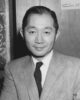
Minoru Yamasaki was born in Seattle on December 1st, 1912. His parents were immigrants from Japan. In 1929, he began studying architecture at the University of Washington, graduating with a bachelor’s degree in 1934. That same year, he moved to Manhattan, earning a master’s degree at New York University.

During the 40s, Yamasaki found himself and his family in danger of being interned in American camps. The firm he worked for at the time, Shreve, Lamb & Harmon, helped him stay safe. He in turn protected his parents. He also worked to help Japanese Americans who were forced to relocate.
In 1949, Yamasaki created a firm of his own, Yamasaki & Associates. The firm would outlive him. He died on February 6th, 1986. His firm closed at the end of 2009.
New Formalism: “Serenity, Surprise and Delight”

Yamasaki mostly worked in the style of New Formalism. This modernist offshoot defied the “form is function” philosophy that dominates most Mid Century Modern architecture and design. Architects working in New Formalism brought elements of Classical and gothic architecture into modernist buildings. They used concrete to create unusual shapes that you will not see in most MCM buildings.
Yamasaki’s works retain the simplicity associated with most MCM. But they feature decorative elements that are not typical of most modernist buildings of that era. He wanted his structures to invoke “serenity, surprise and delight.”
Minoru Yamasaki’s Career and Works

Yamasaki’s first very famous work was the Pruitt-Igoe housing project in St. Louis in 1954. It was built in the International Style, and fell into disrepair. Its demolition was televised live in 1972.
Over time, Yamasaki’s work evolved into his own New Formalism style. Buildings like the Voya Financial building, the Prentis Building and DeRoy Auditorium Complex, Dhahran International Airport, and the McGregor Memorial Conference Center show off the sleek, slender, organic-looking columns and gothic flair that makes Yamasaki’s work so recognizable.

Windows in his buildings were often narrow. This was a stylistic decision, but it also reflected his fear of heights.
One of his most famous works was the United States Science Pavilion at the 1962 Century 21 Exposition in Seattle. Today it still stands, known as the Pacific Science Center. The building features graceful columns with gothic arches. Next to it is a reflecting pool, and a set of freestanding gothic arches/towers with a delicate, almost skeletal appearance. At night, the towers are illuminated by colourful lights, making them look even more surreal.

Yamasaki’s most famous design, however, was the World Trade Center. During the decades it stood, it was not the most popular building; reception was actually more mixed than a lot of people remember. After its destruction on September 11th, 2001, both the design and Yamasaki’s body of works as a whole gained much more appreciation.
If you enjoyed this post, you may also like Midcentury Marvels Along America’s Pacific Coast and Northwest Regional Style: The Mid Mod of the Pacific Northwest.
And of course, don’t forget to follow us on Instagram, Facebook, Pinterest and YouTube for more Atomic Ranch articles, house tours, and ideas!



.jpg)

